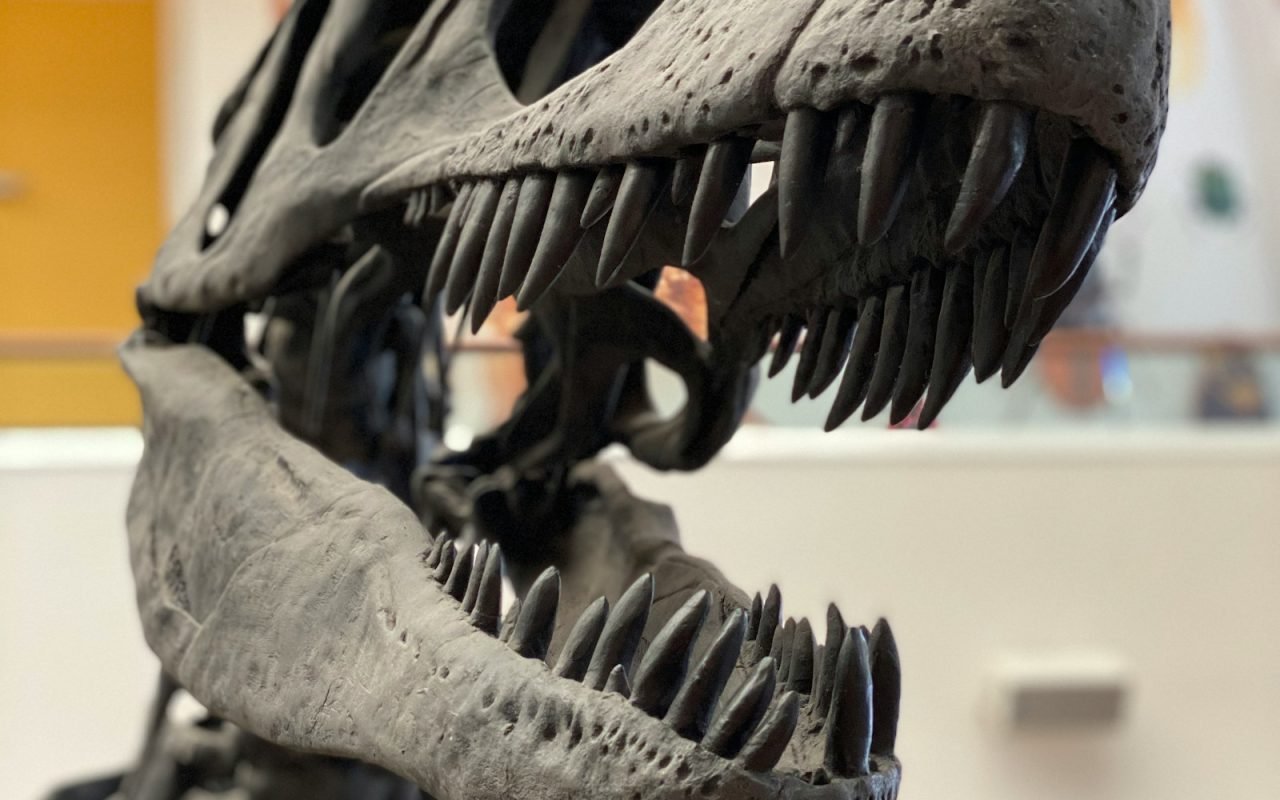
The sparrow at your feeder is a living dinosaur. Birds descend from small, feathered theropods — the same group as T. rex. That is not a figure of speech or a loose family resemblance. In the way scientists classify living things, birds sit right inside the dinosaur family tree, the way bats sit inside the mammal family tree. When the asteroid struck about 66 million years ago, the giant dinosaurs vanished. One branch, small and feathered, made it through. Today it includes about 10,000 species, from hummingbirds to ostriches.
The evidence
Fossils from China show many non-flying dinosaurs with feathers, and birds and theropods share wishbones and hollow bones. For a long time, the idea that birds came from dinosaurs was a bold hypothesis. Over the past few decades, it has become one of the best-supported ideas in paleontology, and the evidence comes from many directions at once.
Feathers before flight
Beginning in the 1990s, fine-grained rocks in northeastern China started yielding astonishing fossils. Volcanic ash had buried animals so gently that the outlines of their soft parts survived, including feathers. Some small meat-eating dinosaurs were covered in simple, hair-like fuzz. Others had true quill feathers on their arms and tails. Several had feathers on all four limbs. Many of these animals clearly could not fly, which tells us feathers first evolved for other jobs, such as keeping warm, showing off to mates or shielding eggs in a nest.


Shared skeletons
Birds and theropod dinosaurs also share a long list of skeletal features. Both have a wishbone, formed from two fused collarbones. Both have hollow, air-filled bones that are light but strong. Both walk on three main forward-facing toes, which is why a theropod footprint and a large bird’s track can look so similar. Some theropods even had wrist bones that let them fold their arms against their bodies, just as birds fold their wings.

Behavior in stone
Some of the most charming evidence is about behavior. Fossils show certain small theropods sitting on nests of eggs with their arms spread over them, exactly like a brooding bird. Others were found curled up asleep with their heads tucked toward their bodies, another bird-like pose. Studies of dinosaur bone tissue suggest some grew quickly, the way birds do, rather than slowly like most modern reptiles.
Next time a crow stares at you, remember: it’s a dinosaur sizing you up.
Dr. Priya Raman, biologist
Dr. Priya Raman, a biologist who often speaks to school groups, says the idea lands best when kids look at a chicken foot next to a cast of a small theropod’s foot. “They don’t need any convincing after that,” she said. “The scales on the bird’s legs, the claws, the three toes. It’s all right there.”
Archaeopteryx
This famous 150-million-year-old fossil mixes bird features with reptile features like teeth and a bony tail. It was first found in Germany in the 1860s, only a couple of years after the theory of evolution by natural selection was published, and it quickly became one of the most discussed fossils in the world.
Archaeopteryx was about the size of a raven. It had well-developed flight feathers on its wings and tail, much like a modern bird. But it also had a mouth full of small teeth, three clawed fingers on each wing and a long tail made of bone, all features that modern birds lack. For over a century it stood as the classic “in-between” animal.
Today, scientists know it was not a lone link. The Chinese fossils and other discoveries have filled in a whole crowd of feathered relatives around it, some more bird-like, some less. Rather than a single missing link, the picture now looks like a bushy family tree in which bird features appeared gradually, one at a time, over millions of years.
So what counts as a dinosaur?
The phrase “birds are dinosaurs” can sound like a trick, so it helps to know how scientists define groups. Modern classification is based on ancestry. A group should include a common ancestor and all of its descendants. Dinosaurs are the group that includes the last common ancestor of animals like Triceratops and pigeons, plus every descendant of that ancestor.
Because birds evolved from theropods, leaving them out would be like leaving bats out of mammals because they fly. That is why many paleontologists now use the term “non-avian dinosaurs” for the extinct ones, and simply “birds” or “avian dinosaurs” for the ones still around.
How the giants fit in
None of this means T. rex was secretly a giant chicken. Birds did not descend from T. rex itself. Instead, birds and tyrannosaurs share a common ancestor deeper in the theropod family, much the way you share a great-great-grandparent with distant cousins you have never met. T. rex belonged to one branch of that family; the ancestors of birds belonged to a neighboring branch of small, lightly built predators.
Still, the giant relatives may have had more in common with birds than old movies suggested. Some early tyrannosaur relatives, found in the same Chinese rock layers, had a coat of simple feathers. Whether an adult T. rex was fluffy, scaly or a mix of both is still debated, since skin impressions from the largest tyrannosaurs show patches of scales. Large animals tend to overheat, so many researchers suspect big adults had fewer feathers than their young.
Scientists have even managed to recover traces of original proteins from some exceptionally well-preserved dinosaur bones. Comparisons of those fragments with living animals fit the same pattern as the bones themselves: the closest living relatives of dinosaurs like T. rex are birds, followed by crocodiles and alligators. In other words, the next time you visit a zoo, the reptile house and the aviary hold the two nearest family members of the dinosaurs.
That also explains a small mystery many kids notice: why a bird’s call can sound so ancient. Crocodiles and birds share some ways of making sound and caring for their young, hints of habits that may go back to their shared ancestors.
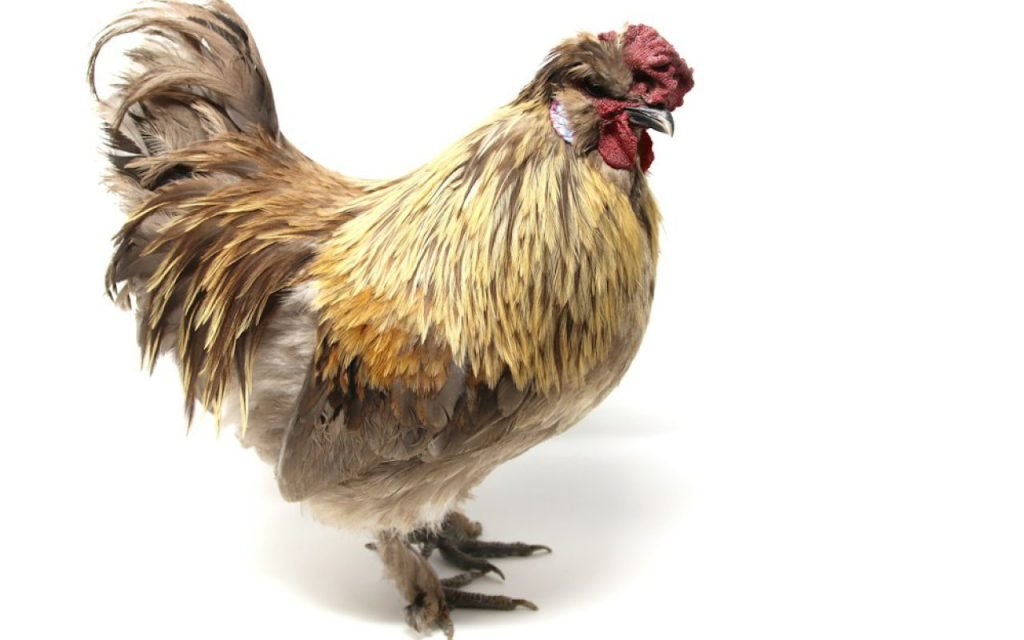
Spot the dinosaur in your backyard
You do not need a museum pass to see the connection for yourself. Next time you watch birds, look for these clues:
- Scaly legs and feet. Bird feathers stop above the ankle on most species, leaving reptile-like scales below.
- Three forward toes. Compare a crow’s footprint in mud with photos of small theropod tracks.
- Head-bobbing hunters. Herons and roadrunners stalk prey with a focus that is easy to picture in a small predator.
- Nesting behavior. Watch a robin sit on her eggs and you are seeing a habit dinosaurs had too.
Key takeaway: birds did not just descend from dinosaurs long ago. They are dinosaurs, the one lineage that survived and spread across the planet.
Quick facts
- Not every dinosaur went extinct
- Many dinosaurs had feathers
- Chickens are distant cousins of T. rex
There is something wonderful about knowing the age of dinosaurs never fully ended. It is still going on outside your window, in the pigeons on the sidewalk, the hawks circling the highway and the sparrows squabbling at your feeder. They may be smaller than their famous relatives, but they carry the same long story in their bones.