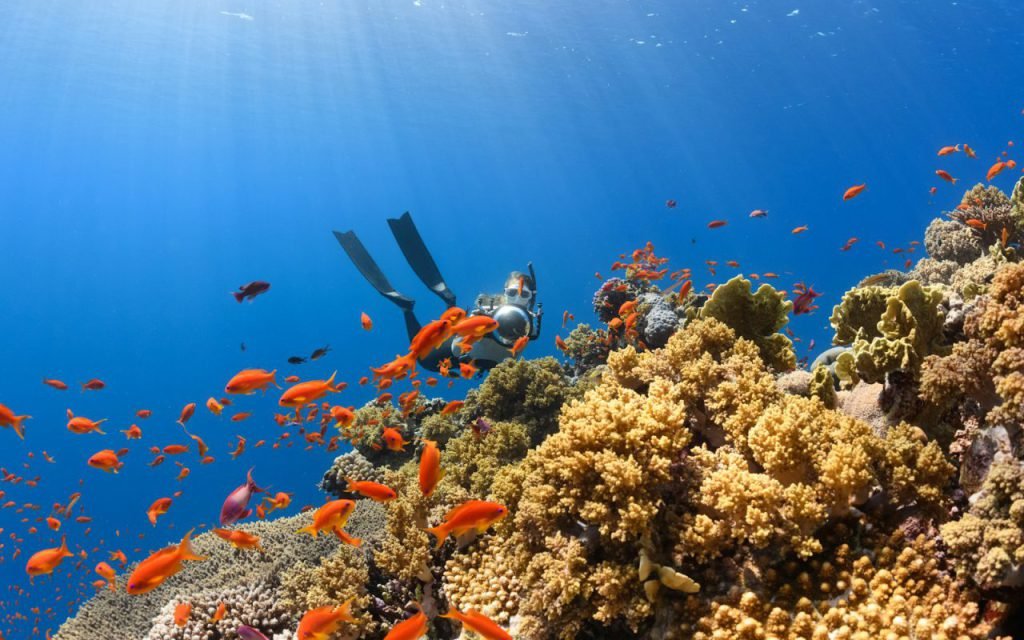
Coral reefs take up a tiny fraction of the seafloor, but they support an enormous share of ocean species. Together they cover less than 1% of the ocean, yet roughly a quarter of all known marine species depend on them at some point in their lives. Fish hide in their branches, sea turtles graze on their edges, and countless shrimp, crabs, snails and worms live tucked into their cracks. Few places on Earth pack so much life into so little space, and few are changing as quickly.
Corals are animals
Each coral is a colony of tiny animals that live with algae inside their tissues. The animals are called polyps. Each one is a soft, tube-shaped creature, often no bigger than a pencil eraser, with a ring of stinging tentacles around its mouth. A single coral head can be home to thousands of these polyps, all genetically identical and connected to one another.
Reef-building corals have a remarkable partnership with microscopic algae that live inside their cells. The algae use sunlight to make food through photosynthesis and share much of it with the coral. In return, the coral gives the algae shelter and nutrients. Those algae are also where much of a reef’s color comes from: the browns, greens and golds you see in reef photos are often the algae showing through the coral’s clear tissue.


Slow builders
Over time, polyps pull minerals from seawater and build hard limestone skeletons beneath themselves. When polyps die, new ones grow on top. Layer by layer, over hundreds and thousands of years, those skeletons pile up into the vast structures we call reefs. Many corals grow less than an inch a year, which means some of the reefs divers visit today began forming long before the first cities were built.
Why reefs matter so much
Reefs are not just beautiful. They do real work for both wildlife and people.
- Nurseries. Young fish shelter in reef structures until they are big enough to survive in open water, including species that people catch and eat.
- Coastal protection. Reefs act like natural breakwaters, absorbing much of the energy of incoming waves before they reach shore.
- Medicine. Reef organisms produce unusual chemicals, and researchers study them for possible use in new treatments.
- Livelihoods. Fishing and tourism built around reefs support coastal communities from Florida to Hawaii and far beyond.
A healthy reef is the loudest place in the ocean — it crackles with life.
Dr. Priya Raman, biologist
Dr. Priya Raman, a marine biologist, means that literally. Drop an underwater microphone near a thriving reef and you will hear a constant popping and snapping from shrimp, along with grunts, clicks and crunches from fish feeding on coral and algae. “A damaged reef goes quiet,” she said. “Some research groups have even played recordings of healthy reef sounds near restoration sites, because young fish seem to use sound to find a home.”
Bleaching
When water gets too warm, corals expel their algae and turn white. If heat lasts too long, they can die. This is called coral bleaching, and it has become one of the biggest threats reefs face.
Here is what happens. When ocean temperatures rise just a couple of degrees Fahrenheit above the normal summer peak and stay there for weeks, the partnership between coral and algae breaks down. The algae start producing compounds that harm the coral, so the coral pushes them out. Without the algae, the coral’s tissue becomes nearly see-through, and the bright white limestone skeleton shows through. The coral is not dead yet, but it has lost its main food source.
If temperatures drop back to normal soon enough, the algae can return and the coral can recover. If the heat lasts too long, the coral starves, and the reef can become covered in other kinds of algae that make it harder for new corals to settle. Pollution, runoff from land and damage from boats and careless visitors add extra stress on top of the heat.

Helping reefs recover
The good news is that scientists, volunteers and coastal communities are not just watching. Restoration has grown into a serious field, with methods that would have sounded like science fiction a generation ago.
- Coral gardening. Teams snip small fragments from healthy corals and grow them on underwater frames or “trees” in nurseries, where they grow faster than they would on a crowded reef.
- Replanting. Once the fragments reach a good size, divers attach them back onto damaged reef areas using special cement or ties.
- Breeding tougher corals. Some labs study corals that survived past heat waves and breed them, hoping to give reefs more heat-tolerant offspring.
- Cleaning up the water. Reducing runoff, sewage and fertilizer pollution gives corals a better chance to bounce back after stress.
Dr. Raman is careful not to oversell these efforts. “Restoration buys time,” she said. “It can bring a reef area back to life. But it can’t replace the need to keep oceans from getting too warm. Both pieces matter.”
A day at a coral nursery
To see what restoration looks like up close, picture a typical morning at a reef nursery off the Florida Keys. A boat carrying a small crew of scientists and trained volunteer divers anchors over a sandy patch of seafloor about 30 feet down. Below, rows of branching frames made of plastic pipe hold hundreds of coral fragments, each dangling from fishing line like ornaments on a tree.
The divers spend most of their time on chores that sound ordinary but matter enormously. They brush algae and snails off the frames, check each fragment for signs of disease or bleaching, and record how much each one has grown since the last visit. Fragments that have grown large enough are carefully clipped off, placed in baskets and carried to a nearby damaged reef. There, divers scrub a patch of old dead coral clean, add a dab of underwater cement and press each new piece into place.
It is slow, patient work. A single dive might replant a few dozen corals. But nurseries now operate in many reef regions, and over years those dozens add up to thousands. Volunteers often describe returning a year later and finding fish already living among the corals they planted, which may be the best reward any diver can ask for.
Many nurseries rely on community science programs, where trained recreational divers log what they see on each trip. Those simple notes, gathered across hundreds of dives, help scientists spot which coral types are thriving and which need extra care.
Key takeaway: reefs are slow-growing animal cities that support a huge amount of ocean life. They are under pressure, but focused care can help them recover.
Quick facts
- Reefs protect coastlines from waves
- Corals grow very slowly
- Scientists now grow and replant corals
If you visit a reef, you can help in small ways: use a reef-friendly sunscreen, never stand on or touch the coral, and choose tour operators who follow local rules. Back home, cutting down on fertilizer and chemicals that wash into storm drains makes a difference too. Coral reefs have been building themselves one tiny polyp at a time for thousands of years. With a little help, they can keep at it for thousands more.