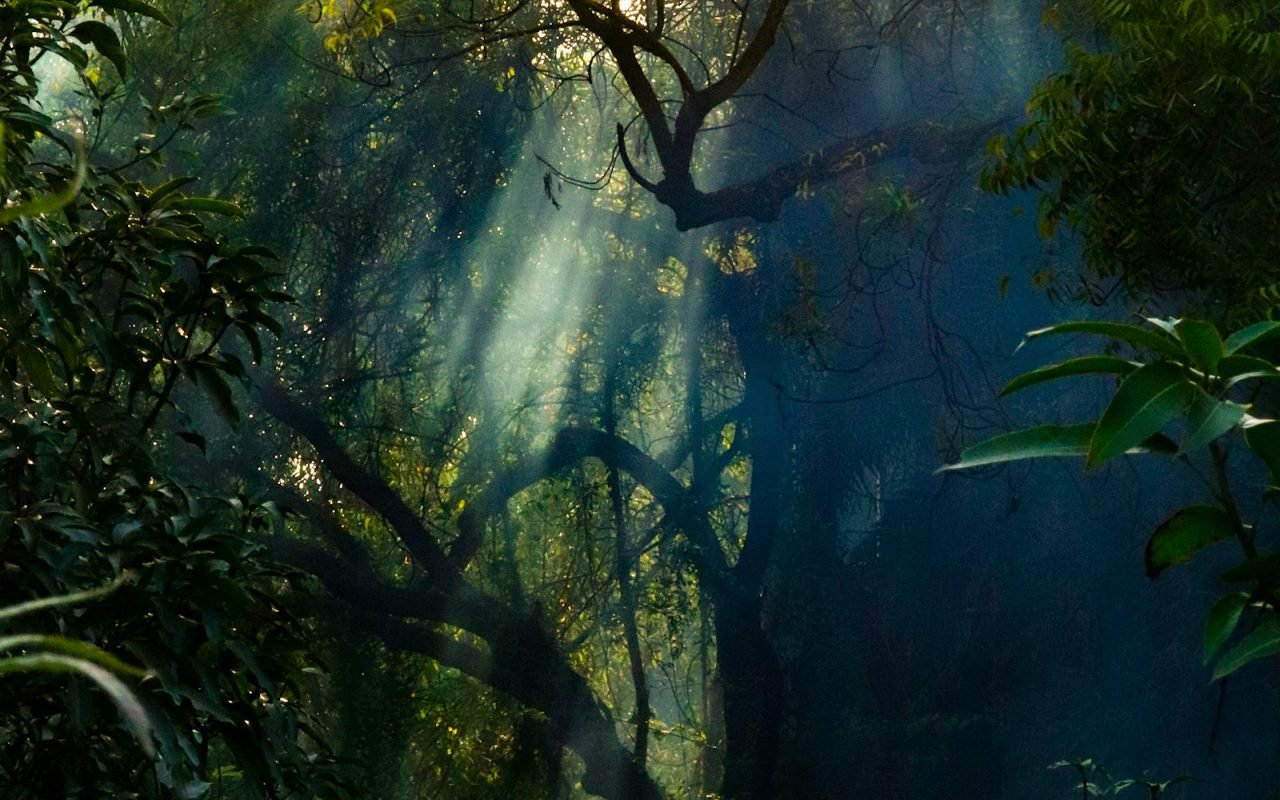

A large rainforest tree can release hundreds of liters of water into the air on a hot day — easily 100 gallons or more from a single giant. Multiply that by the hundreds of billions of trees in the Amazon basin and you get something astonishing: a forest that does not simply wait for rain but helps produce it. Every afternoon, invisible water vapor rises from the canopy, cools, condenses into clouds and falls again as rain, often hundreds of miles away. It is one of the great engines of the planet’s weather, and it runs on leaves.
How a tree sweats
The process starts underground. Tree roots pull water from the soil, and that water travels up through narrow tubes in the trunk and branches all the way to the leaves. Even the tallest rainforest trees, some rising well over 150 feet, can lift water to their highest leaves without any pump, thanks to the pull created as water escapes at the top.
On the underside of each leaf are tiny pores called stomata. Leaves open them to take in carbon dioxide for photosynthesis. When the pores open, water vapor escapes. This is called transpiration, and it works a lot like sweating: as the water evaporates, it carries heat away, helping keep the forest cooler.


On a single tree, that might not sound like much. But a mature rainforest canopy is layered, crowded and enormous. Add up all those leaves and all those open pores, and the forest is pumping a staggering volume of water into the sky every day. Combined with water evaporating from wet leaves, soil and rivers, a large share of the rain that falls on parts of the Amazon is recycled moisture that came from the forest itself.
Flying rivers
Moisture rising from the Amazon travels in huge invisible streams that bring rain to farmland far away. Scientists call these streams “flying rivers,” and the name fits. Some carry about as much water through the sky as the largest rivers carry on the ground.
Here is how it works in broad strokes. Winds blowing in from the Atlantic Ocean bring moisture over the eastern edge of the rainforest. Rain falls. The forest drinks it up and then sends much of it back into the air through transpiration. The winds carry that moisture farther west, where it falls again, and the cycle repeats. Water can be rained down and lifted back up several times as it moves across the continent.
When the moving air reaches the towering wall of the Andes mountains, it turns south. Those flying rivers then help deliver rain to farms, cities and hydroelectric dams far to the south of the forest. In other words, the health of the rainforest can affect the harvests and water supplies of people who live a very long way from it.
The Amazon doesn’t just receive rain. It manufactures it.
Dr. Priya Raman, biologist
Dr. Priya Raman, a biologist who studies tropical ecosystems, says the idea changes how people think about forests. “We tend to picture trees as passive,” she said. “They stand there and the weather happens to them. In the Amazon, the trees are part of the weather system. They help decide where the clouds form.”
The forest’s own cloud seeds
Trees help in a second, subtler way. Rain needs more than moisture. Water vapor condenses into droplets around tiny particles floating in the air. Over the open ocean, those particles are often sea salt. Over the rainforest, many of them come from the forest itself: natural compounds released by plants, pollen, spores and other bits of biological material. In effect, the forest provides some of the seeds around which its own clouds can grow.
That idea is supported by careful observation. Researchers have noticed that over parts of the Amazon, the rainy season can begin weeks before moist ocean winds arrive. The trees appear to kick-start it themselves, releasing enough water vapor in the dry season to build up clouds and trigger the first storms. “It is as if the forest calls in the rain,” Dr. Raman said. “Remove the forest and you may lose part of that signal.”
A tipping point?
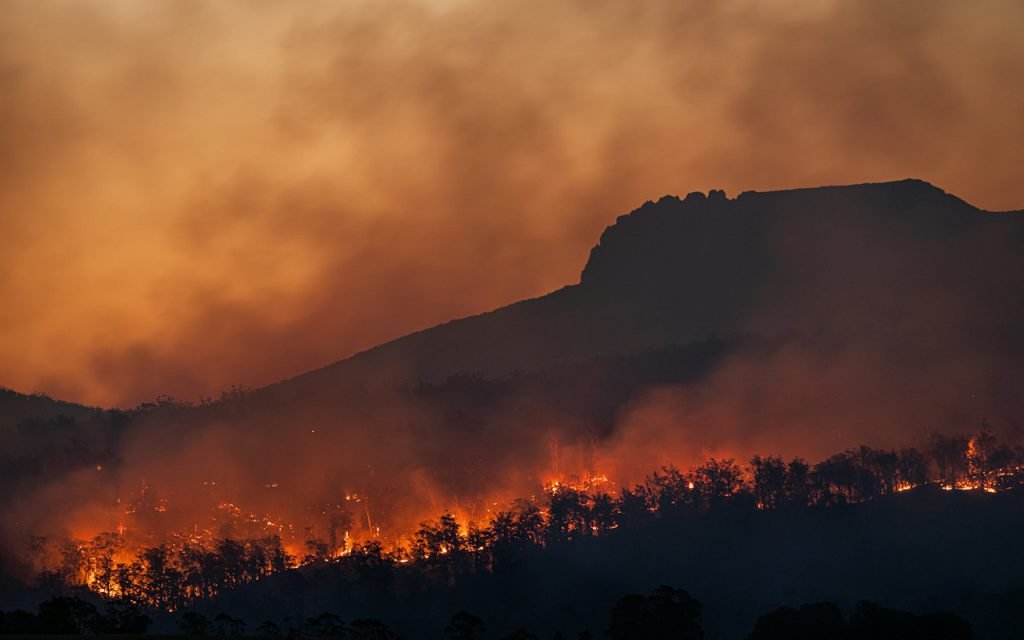
Scientists warn that too much forest loss could weaken this cycle. When trees are cut down or burned, there are fewer leaves to return water to the air. Less moisture moves downwind. Areas farther along the flying rivers may receive less rain, which can stress the trees there too.
Some researchers worry about a feedback loop. Drier conditions make forests more vulnerable to fire and drought. Damaged forests release less moisture, making conditions drier still. If enough of the forest is lost, parts of it could shift toward a drier, more open landscape that looks more like grassland or savanna. Exactly where that tipping point lies is uncertain, and scientists debate the numbers. But the basic idea worries many people who study the region.
Forests closer to home
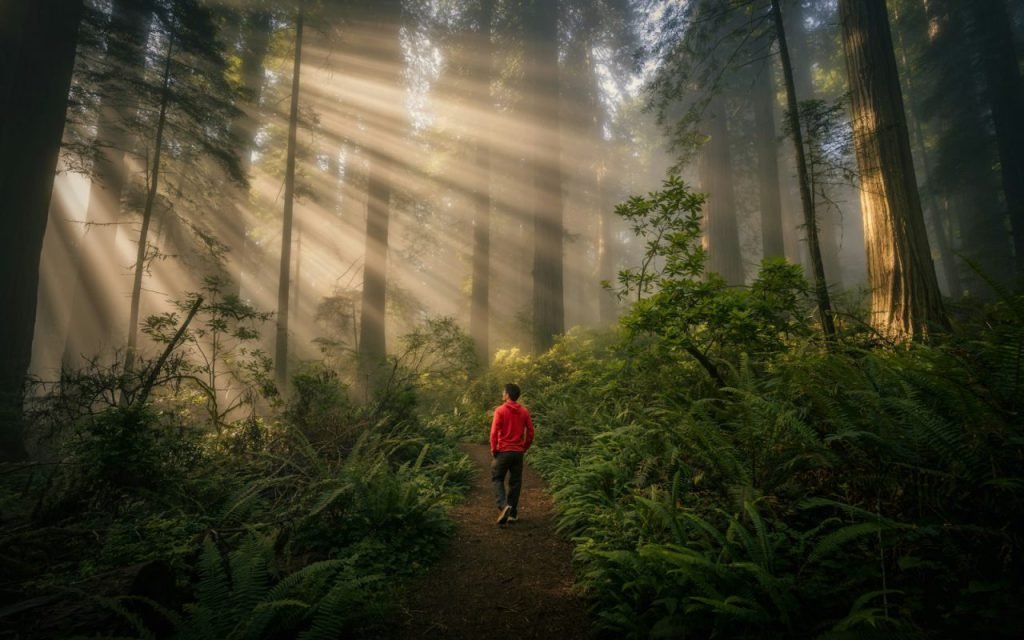
The Amazon gets most of the attention, but the same physics works in forests across the United States. Eastern hardwood forests transpire large amounts of water every summer, which helps explain why a shady forest feels so much cooler and more humid than a nearby parking lot. Forests in the Pacific Northwest catch moisture from passing fog and clouds, dripping it onto the ground below. City trees cool neighborhoods on hot days in the same way, through shade and through the water they release.
A few practical ways people help forests do this work:
- Protect large, old trees, which move far more water than young saplings.
- Plant native trees suited to your local rainfall and soil.
- Support local parks and land trusts that keep forests connected rather than broken into small patches.
- Choose wood and paper products from responsibly managed sources when you can.
- Water street trees during dry spells if your city encourages it.
Watching the cycle from space
Much of what scientists know about flying rivers comes from satellites. Instruments in orbit measure water vapor in the atmosphere, track cloud formation and estimate how much rain falls each day across huge areas. Researchers combine those measurements with weather models and data from towers built above the forest canopy, where sensors record how much moisture rises from the trees hour by hour. Some studies even track the chemical fingerprints of water molecules to tell rain that came straight from the ocean apart from rain that has already passed through the forest. Together, these tools turn an invisible process into one that can be mapped and measured.
Key takeaway: rainforests are not just places where it rains. They help make the rain, for themselves and for people living far away.
Quick facts
- Water evaporates from leaves through transpiration
- Rainforests are home to a huge share of land species
- Forests store large amounts of carbon
Next time you walk through a forest on a humid summer day, take a deep breath of that heavy, green air. Some of the moisture you feel came out of the leaves above you, and some of it will fall as rain somewhere else tomorrow. Forests, it turns out, are not only shaped by the weather. They help write it.