
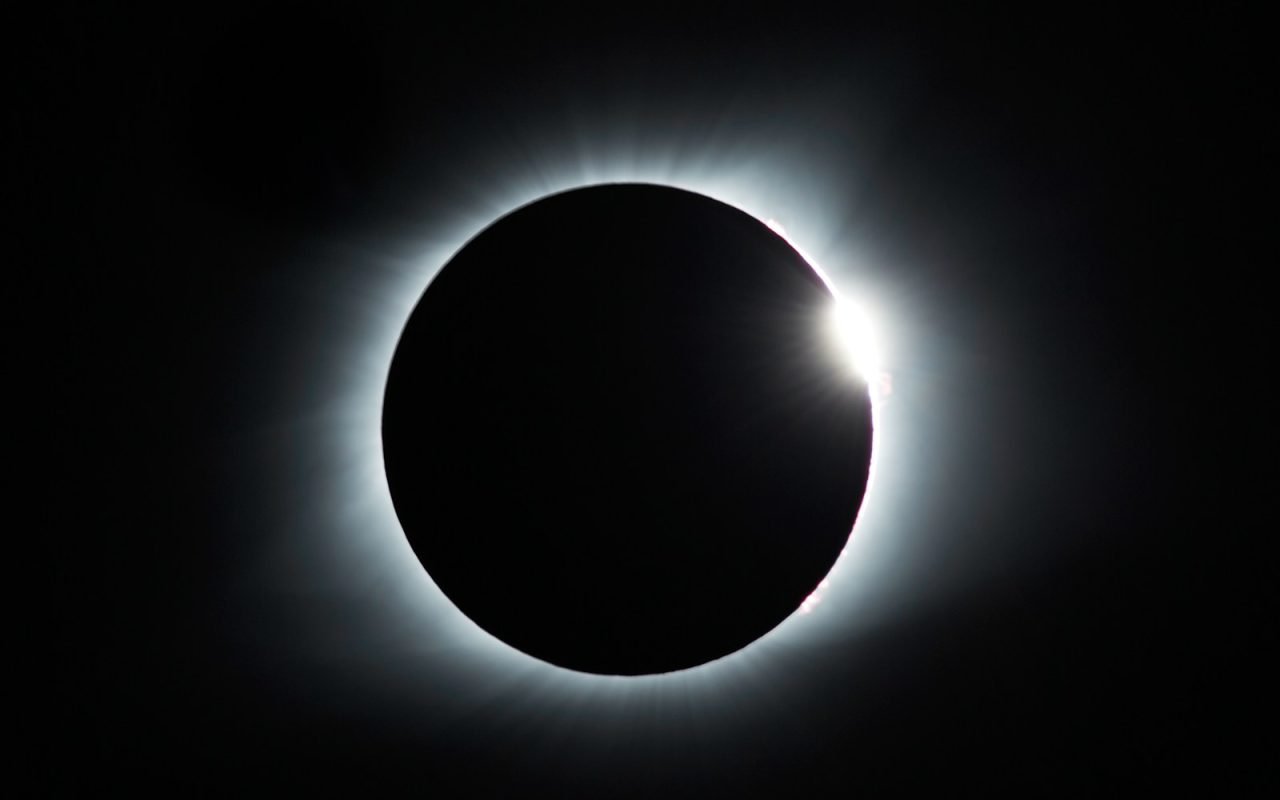
On August 2, 2027, the Moon will completely cover the Sun along a path from the Atlantic across southern Spain, North Africa and Egypt. For a few precious minutes, day will turn into an eerie twilight, the temperature will drop, birds will go quiet and the Sun’s glowing outer atmosphere will spread across the sky like silver flames. Total solar eclipses happen somewhere on Earth every year or two, but this one is special. It will be the longest total eclipse visible from land for the rest of the century.
Near Luxor, Egypt, totality will last more than six minutes — far longer than most total eclipses. Many eclipses offer two or three minutes of darkness. The 2024 eclipse that crossed the United States topped out at about four and a half minutes. Six minutes of totality is a rare gift, and eclipse chasers around the world are already making plans.
Why it lasts so long
The Moon will be close to Earth in its orbit and Earth close to its farthest point from the Sun, so the Moon’s shadow is large and slow. It helps to unpack that a little.


The Moon’s orbit is not a perfect circle. Sometimes it is closer to Earth, and sometimes farther away. When it is close, it looks slightly bigger in our sky and can cover the Sun with room to spare. At the same time, Earth’s orbit around the Sun is also slightly stretched. In early July, Earth is at its farthest point from the Sun, which makes the Sun look a touch smaller. In early August 2027, both effects work together: a large-looking Moon covers a small-looking Sun.
Geography helps too. The path of totality crosses North Africa close to the point where the Moon’s shadow falls most directly on Earth, and close to the equator, where Earth’s rotation carries the ground along in the same direction the shadow is moving. That slows the shadow relative to observers on the ground, stretching out the darkness.
What you will see during totality
Totality is unlike anything else in nature, and people who have seen one often describe it as the most striking sight of their lives.
Totality is the closest thing to magic most of us will ever see. Go if you possibly can.
Dr. Lena Ortiz, astronomer
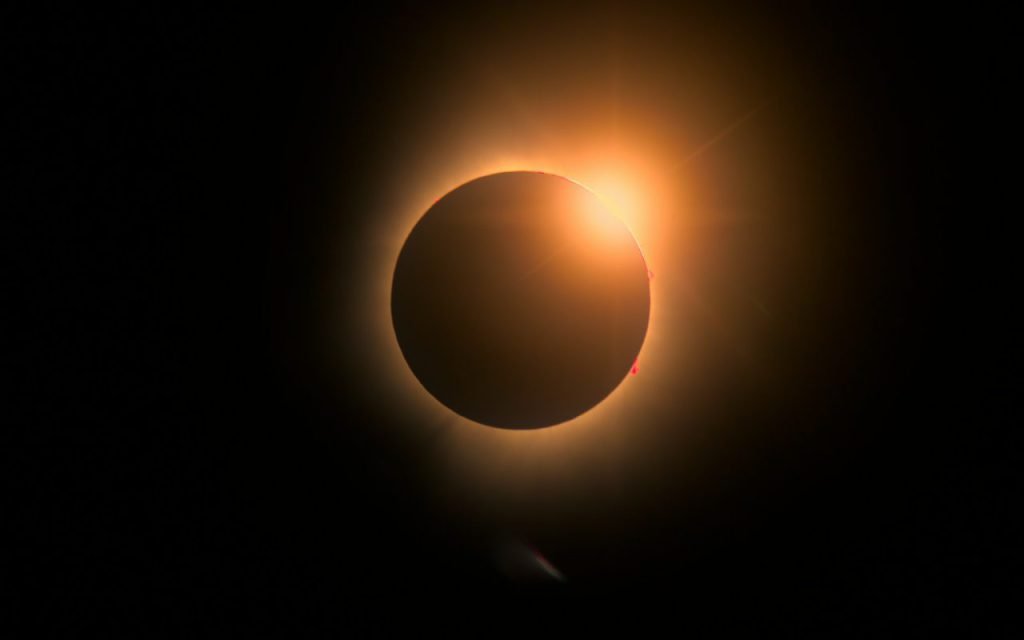
Dr. Lena Ortiz, an astronomer who has traveled to several eclipses, says the experience builds in stages. As the Moon slowly covers more of the Sun over about an hour, the light turns strangely flat and silvery. Shadows sharpen. In the last minute, thin bands of light and shadow may ripple across the ground. Then the last bead of sunlight disappears, and the sky goes dark in a rush.
“That’s when people start shouting,” she said. “You suddenly see the corona, the Sun’s outer atmosphere, streaming out in every direction. You may see bright planets and stars. There’s a sunset glow all around the horizon. And with six minutes, you actually have time to take it all in instead of fumbling with a camera.”
Things to look for
- The corona: pearly white streamers around the dark Moon, visible only during totality.
- Prominences: small pinkish-red loops of gas along the edge of the Moon.
- Planets: bright planets can pop into view in the darkened sky.
- The 360-degree sunset: a colorful glow on every horizon, because you are standing inside the Moon’s shadow.
- Animal behavior: birds may roost and insects may start their evening calls.
How to watch safely
Use certified eclipse glasses for every partial phase. Only during totality is it safe to look with the naked eye. This is the single most important rule of eclipse watching, and it is worth spelling out carefully.
Looking at the Sun without proper protection can cause serious, permanent eye damage, and it can happen without any pain at the moment. Ordinary sunglasses, even very dark ones, are not safe. Eclipse glasses and handheld solar viewers must meet the international safety standard for direct solar viewing, often labeled ISO 12312-2. Buy them from a reputable seller, check them for scratches or holes before use, and supervise children closely.
- Put your eclipse glasses on before looking up, and look away before taking them off.
- Keep them on through all the partial phases, even when only a thin sliver of Sun remains.
- Remove them only once the Sun is completely covered and the bright light is gone.
- Put them back on the moment the first bright point of sunlight reappears.
- Never look through a camera, binoculars or telescope at the partial Sun unless it has a proper solar filter on the front.
If you have questions about your eyes or a medical condition, ask an eye care professional before the trip.

Planning a trip from the United States
For American travelers, this eclipse will mean an international trip, and it is wise to start planning early. Hotels near the centerline, especially around Luxor, are expected to fill up well ahead of time. A few general tips from seasoned eclipse travelers:
Book flexible lodging and flights if you can, and check your passport’s expiration date now. Many countries require it to be valid for several months beyond your travel dates. Look up official travel advisories and entry rules from the State Department well in advance. Summer heat in North Africa and Egypt can be intense, so pack sun protection, light clothing and plenty of water, and plan to stay out of the midday sun before the eclipse begins. Weather forecasts for early August in the desert are usually favorable, but cloud cover is never guaranteed, so having transport that lets you move a short distance on the day can help.
A simple eclipse-day checklist
Veteran eclipse travelers tend to keep things simple on the big day. Pack your eclipse glasses in an easy-to-reach pocket, along with a spare pair in case one gets lost or damaged. Bring a hat, a folding chair, snacks and more water than you think you need. Charge your phone and camera the night before, and decide in advance how much time you will spend taking photos. Dr. Ortiz recommends setting a camera on a tripod to run on its own, then putting it out of your mind. “The best memories come from just looking up,” she said.
Arrive at your viewing spot early, ideally several hours before the partial phases begin, to avoid traffic and crowds. Pick a place with a clear view of the sky in the right direction and, if possible, some shade nearby for the long wait.
If travel is not possible, you can still follow along. Many observatories and science groups plan live online broadcasts, and the our countdown will track the big day.
Key takeaway: August 2, 2027, offers a rare six-minute totality. Plan early, travel smart and protect your eyes during every partial phase.
Quick facts
- Date: August 2, 2027
- Longest totality: about 6 minutes 23 seconds, near Luxor
- Never look at a partial eclipse without proper filters
Eclipses are a reminder that we live on a moving planet, circling a star, with a Moon that happens to be just the right size to block it out. On August 2, 2027, the timing will line up better than it will again in our lifetimes. If you can be there, go. If you cannot, watch from wherever you are, and start planning for the next one.





Thanks for explaining this so clearly.
Great reporting — please keep following this story.