
A logistics startup that began in a two-car garage has raised $40 million to expand same-day delivery to small towns that big retailers mostly ignore. The company, Roadrunner Local, now delivers in 180 towns across the Midwest, and its founders say the new money will let them reach places where the nearest big-box store is still a long drive away and two-day shipping often means four or five.
The round was led by Prairie Fund Partners, a venture firm that focuses on rural and regional businesses, with participation from Heartland Growth Capital and several of Roadrunner Local’s existing investors. The company did not disclose its valuation. Two years ago, it had three employees, one minivan and a whiteboard covered in hand-drawn route maps.
A shared route, not a fleet
Roadrunner Local does not run warehouses, and it does not sell anything itself. Instead, the company partners with independent stores and uses shared routes so one driver can carry orders from a hardware store, a pharmacy and a bakery on the same run. Customers order through an app or by calling the store directly. The store packs the order, and a driver picks it up on a scheduled loop that runs several times a day.


That shared approach is the core of the business. A single small shop could never afford its own delivery driver for a handful of orders a day. But when a dozen shops on the same Main Street split the cost, the math starts to work. Roadrunner Local charges stores a flat monthly fee plus a small per-order charge, and customers usually pay a delivery fee of $4.99 or less.
How a typical run works
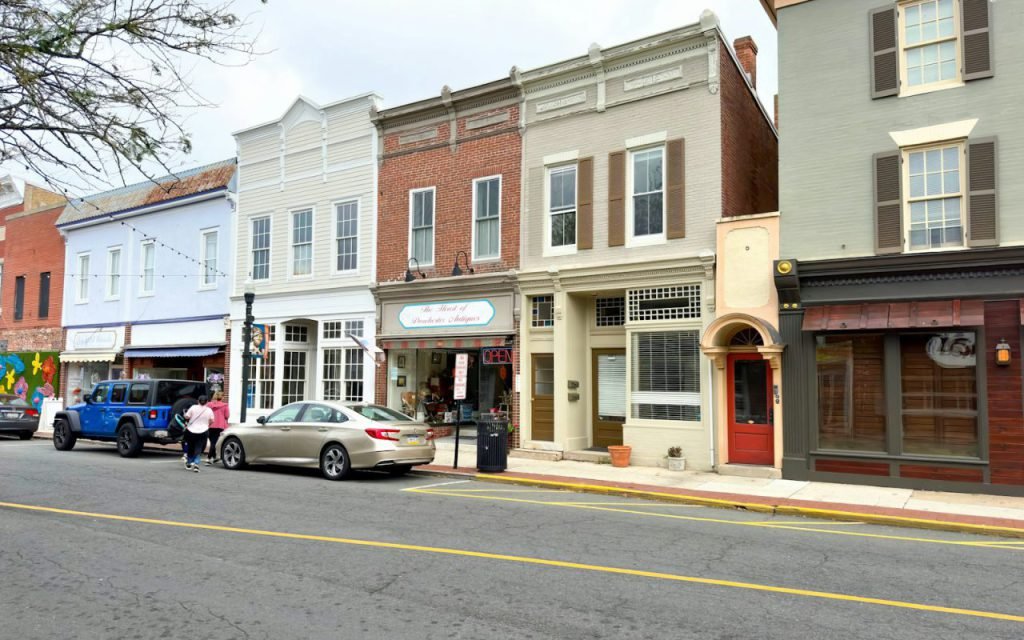
On a weekday morning in a town of 5,000 people, a driver might start at the hardware store with a box of furnace filters, stop at the pharmacy for two prescription bags, swing by the bakery for a birthday cake and then head out on a loop through the surrounding neighborhoods and farm roads. Most deliveries arrive within three hours of ordering. Orders placed after 3 p.m. typically arrive the next morning.
The software that plans those routes was written by co-founder Marcus Delgado, a former school bus dispatcher who taught himself to code. He said the hardest part was not the math but the details: which back roads flood in spring, which customers have dogs that don’t like strangers and which gravel driveways are too steep for a small car in January.
Why small towns
Co-founder Priscilla Hayes grew up in a town of 3,000 people. “The nearest big store was 45 minutes away,” she said. “We wanted the local shops to be able to compete on convenience.”
Hayes said she watched several stores in her hometown close over the years, not because people disliked them but because ordering online had become easier than driving into town. She believes many rural shoppers would rather support a store they know, if only it were as easy as clicking a button.
Main Street doesn’t need to beat online prices. It needs to beat online waiting.
Priscilla Hayes, co-founder
That idea has resonated with shop owners. In a survey the company ran with its partner stores last spring, most said delivery orders were bringing in customers who had not shopped with them before, including older residents who no longer drive and young parents who find it hard to get out with small children.

What the $40 million will pay for
The new funding will add 60 towns next year and 200 jobs, most of them drivers. Hayes said the company prefers to hire drivers who live in or near the towns they serve, because they know the roads and often know the customers by name.
According to the company, the money will be spent on:
- Expanding into 60 new towns, mostly in Iowa, Nebraska, Kansas and Missouri
- Hiring about 200 people, including drivers, route planners and store support staff
- Adding refrigerated vehicles so grocery and pharmacy partners can send cold items
- Building a simpler ordering system for stores that do not have their own websites
- Training programs to help shop owners photograph products and manage online orders
Drivers are employees, not contractors, and receive health benefits after 90 days, the company said. Starting pay varies by region but begins at $19 an hour, plus mileage for drivers who use their own vehicles.
The challenges ahead
Delivery in rural areas is notoriously hard. Distances are long, homes are spread out and order volumes are small. Many companies have tried and retreated. Investors in Roadrunner Local say the shared-route model gives it a better chance, but they acknowledge the risks.
The question was never whether rural customers want delivery. They obviously do. The question is whether anyone can make the routes pay. Roadrunner is the first team we’ve seen that has a real answer.
Gloria Whitaker, partner, Prairie Fund Partners
Fuel costs are a constant concern, and winter weather can shut down routes for days at a time. The company is testing electric vans in two towns with charging stations near the town square, but Hayes said gas vehicles will remain the backbone of the fleet for now because of the distances involved.
Competition is another question. Larger retailers have experimented with rural delivery of their own, and some grocery chains offer pickup lockers in small towns. Hayes said Roadrunner Local’s advantage is that it does not compete with its partners. “We don’t want to replace the hardware store,” she said. “We want it to still be there in 20 years.”
There is also the question of reliability. In a big city, a missed delivery window is an annoyance. In a town where the pharmacy is the only one for 30 miles, a late prescription can be a real problem. Roadrunner Local says it keeps a backup driver on call in every region and gives pharmacy orders priority on every route. Store owners can also flag urgent orders in the app so dispatchers know to send them out first.
Some economists who study rural retail say the model could help, but they caution that delivery alone will not save struggling downtowns. Stores still need to carry what people want at prices they can accept, and towns still need enough residents to support them. Hayes agreed. “We’re one tool,” she said. “We’re not a miracle. But we’re a tool that a lot of these stores didn’t have before.”
From a garage to 180 towns
The company’s first deliveries were made by Hayes herself, driving a borrowed minivan between her parents’ town and two neighboring communities. Delgado wrote the first version of the routing software on a laptop balanced on a workbench in his garage, next to a lawnmower and a set of snow tires.
Within six months, they had 14 partner stores. By the end of the first year, they were in 40 towns and had hired their first full-time drivers. Today, the company has about 320 employees, most of them in the field, and a small headquarters above a former feed store in central Iowa.
Key takeaway: Roadrunner Local is betting that small-town shops can hold on to their customers if delivery is fast, cheap and shared, and its investors are betting $40 million that it is right.
What comes next
Hayes said the company will announce the first group of new towns in January, starting with communities where several store owners have already asked to join. She said she still answers some of those emails herself.
For the shops already on board, the effect has been concrete. The owner of a family pharmacy in one partner town said delivery orders now make up about a fifth of the store’s prescriptions. A bakery owner in another said she had hired a second baker to keep up with weekend cake orders. Those are small numbers by big-city standards, Hayes said, but they are exactly the numbers that keep a Main Street alive.





Thanks for explaining this so clearly.
Great reporting — please keep following this story.