

For eleven years, the clock on the corner building stopped at 4:17. On Saturday, it started ticking again. At exactly noon, a small crowd gathered on Church Street went quiet as the minute hand jumped forward for the first time since 2015, followed by a long round of applause, a few cheers and at least one person who said out loud, “Well, I’ll be.”
A team of eight volunteers raised $48,000 and restored the movement by hand. The work took two winters, hundreds of hours and a surprising amount of detective work in the city archive. The result is a clock that keeps time to within a few seconds a week, according to the volunteers, and a landmark that once again does the job it was built to do.
A landmark frozen in time
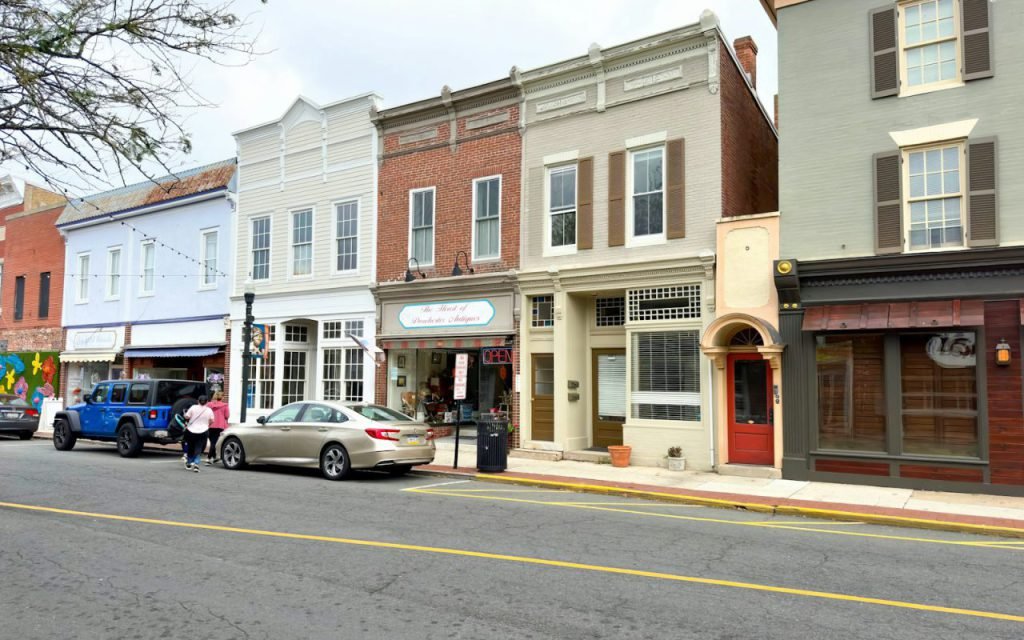
The clock was installed in 1896 on the corner tower of what was then a dry goods store and is now home to a bank branch on the ground floor and offices above. Its four faces, each about six feet across, can be seen from much of Church Street and from several blocks down the hill toward the lake.


For most of the 20th century, a building custodian wound the clock by hand each week. When that position was eliminated in the 1990s, the clock was converted to an electric motor. That motor failed in 2015, and with no money set aside for repairs, the hands stayed frozen at 4:17.
Over the years, the stopped clock became something of a local joke. Tourists photographed it. Restaurants downtown named a happy hour after it. Some residents said they had stopped noticing it at all.
How eight volunteers got it done
The restoration started with a conversation at a coffee shop in 2023. Walter Pike, a retired machinist who repairs antique clocks as a hobby, mentioned to a friend that he’d love to get the Church Street clock running. The friend, a member of the city’s historic preservation commission, told him that if he could raise the money, the building owner would allow the work.
Pike recruited seven other volunteers: an electrician, a retired engineer, a carpenter, a high school physics teacher, a fundraiser, a local historian and a college student studying mechanical engineering. They called themselves the Clock Crew.
The group raised the $48,000 in about 14 months, through a mix of sources:
- Small online donations from more than 700 residents, many of them $25 or less.
- A matching grant from a local community foundation.
- Contributions from downtown businesses, including the bank that occupies the building.
- A “buy a minute” campaign that let donors sponsor one of the 60 minute marks on the dial for $100 each.
The building’s owner agreed to cover the cost of scaffolding and insurance during the work.
Two winters of work
The clockmaker rebuilt gears from drawings found in the city archive. When Pike and the crew first climbed into the tower, they found that the original mechanical movement was still there, hidden behind the electric motor that had replaced it. But it was badly worn. Several gears were cracked, one was missing entirely, and decades of dust and pigeon nests had gummed up the works.
The breakthrough came when the volunteer historian found a folder of hand-drawn plans from the original installation in the city archive, filed under the name of the store rather than the clock. The drawings showed exact gear sizes and tooth counts.
People kept telling me what time it was stuck at. Now they tell me it’s right.
Walter Pike, volunteer clockmaker
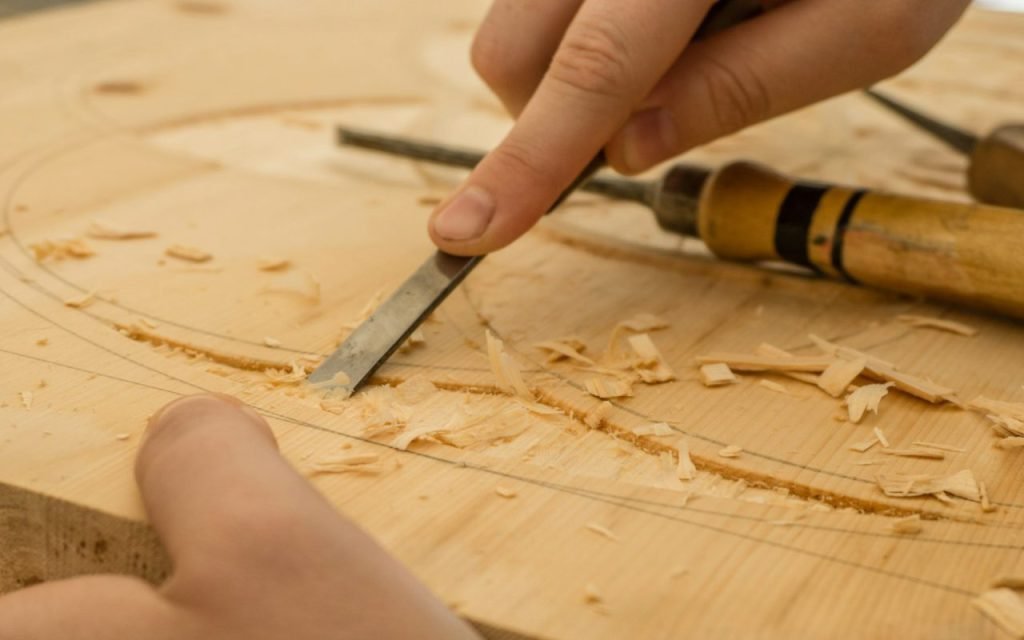
Pike spent most of two winters in his basement workshop, cutting replacement gears from brass stock using the old drawings as his guide. The engineer and the college student helped measure and test each piece. The carpenter repaired the wooden housing in the tower, and the electrician installed lighting so the faces can be seen at night.
Each of the four glass faces was removed, cleaned and resealed. Two cracked panes were replaced with new glass cut to match. The hands were stripped, repainted and rebalanced.
Not everything went smoothly. In the first winter, a replacement gear Pike had spent three weeks cutting turned out to be a fraction of an inch too large, and he had to start over. In the spring, a late snowstorm delayed the reinstallation of the faces by nearly a month. And the crew discovered that the cast-iron frame holding the movement had shifted slightly over the years, which meant the whole assembly had to be leveled with shims before the clock would run evenly.
“Every old machine has a few surprises left in it,” said Grace Lin, the college student on the crew, who spent much of last summer measuring gear clearances with a magnifying glass. “I learned more in that tower than in any class I’ve taken.”
Choosing the old way
The volunteers debated whether to install a new electric motor or return to hand winding. In the end, they chose to restore the original mechanical system. Pike said it was partly a matter of history and partly a matter of practicality. “A good mechanical clock can run for another hundred years if somebody cares for it,” he said. “Electric motors wear out, and then you’re back where you started.”
Who keeps it running
A volunteer will wind it every Sunday morning. The job takes about 20 minutes and involves climbing a narrow ladder into the tower and turning a hand crank to lift the heavy weights that power the movement. The crew has trained four people to share the duty on a rotating schedule, so no one person has to do it every week.
The physics teacher plans to bring small groups of students up to watch the winding a few times a year, with the building owner’s permission. The city’s historic preservation commission has also agreed to set aside a small annual budget for maintenance, so the clock won’t sit broken for another decade if a part wears out.
“The worst thing would be to do all this and have it stop again in five years because nobody was watching,” said Carla Mendes, the crew’s fundraiser. “We built a plan to keep it going, not just to fix it once.”
A city that noticed
On Saturday, the crowd on Church Street included families, downtown shop owners, the mayor and several people who said they had walked past the stopped clock every day for years. One woman said she had set her own kitchen clock to 4:17 as a tribute and would now have to change it. A man who has worked downtown since the 1980s said he got a little emotional when the hands began moving.
The mayor thanked the volunteers and noted that the project didn’t use any money from the city budget. “This is what people mean when they talk about community,” she said.
Key takeaway: With hand-cut gears, old archive drawings and a weekly winding schedule, eight volunteers turned a downtown joke back into a working landmark.
The Clock Crew is still accepting small donations for the maintenance fund. And if you notice the clock running a few minutes slow, they’d like to hear about it — though Pike says that, so far, it’s been right on time.











Thanks for explaining this so clearly.
Great reporting — please keep following this story.