The twelve-year-olds from Maple Grove, Ohio, came within one run of the national final. What people will remember is the dance. It started as a joke on a bus ride through Indiana, became a dugout ritual by the end of the regional tournament and, by the time the team was eliminated in a 4–3 semifinal heartbreaker, had been viewed more than 40 million times online. Nobody in Maple Grove seems especially upset about the loss.
Maple Grove is a town of about 9,000 people forty minutes outside Columbus, with one stoplight on Main Street, a grain elevator you can see from the highway and a youth baseball complex built largely by volunteers in the 1990s. It had never sent a team this far. Before this summer, the best finish in the program’s history was a state semifinal appearance more than twenty years ago. This group of fourteen kids, most of whom have played together since T-ball, changed all of that in a few short weeks.
A bus ride and a shortstop’s idea
After every strikeout, the dugout broke into a routine their shortstop invented on the bus. By the third game, the whole stadium was doing it. The shortstop, Mason Reilly, says the idea came to him somewhere between Indianapolis and the regional tournament site, while the team was trying to stay awake during a long drive.


The dance itself is simple, which is probably why it spread so fast. Two claps, a sweeping arm motion like a windshield wiper, a little hop and then every player points at the pitcher. It takes about four seconds. Reilly taught it to his teammates in the back row of the bus, and they tried it for the first time after their starting pitcher struck out the side in the first inning of the regional opener.
“Coach looked at us like we were crazy,” Reilly said. “Then the umpire laughed. Then he kind of did it too. After that we had to keep going.”

How 40 million people found Maple Grove
The first video was posted by a parent in the stands, who filmed the dugout during a regional game and shared it with a few friends. It picked up a few thousand views overnight. Then a national sports account reposted it with the caption “this is what summer is supposed to look like,” and it took off. Within three days the clip had been shared millions of times, and fans were posting their own versions from backyards, offices and wedding receptions.
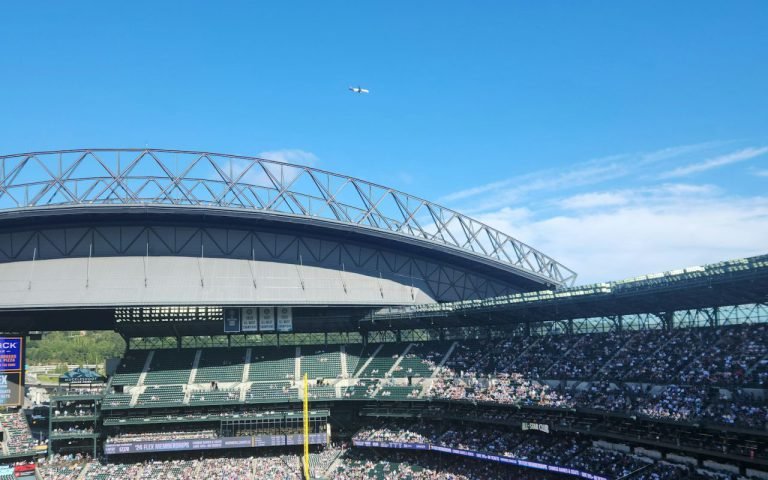
By the time the team reached the national tournament, the dance had become part of the event. Opposing teams learned it. Grandparents in the bleachers did it. During the quarterfinal, the stadium announcer asked the crowd to join in after a Maple Grove strikeout, and nearly 12,000 people stood up at once. A video of that moment, shot from the upper rows, accounts for a large share of the 40 million views.
We just wanted to have fun. I didn’t know my grandma could see it in Florida.
Shortstop Mason Reilly, 12
Reilly’s grandmother, Joan, who lives outside Sarasota, said a neighbor knocked on her door to show her the video before her family had a chance to call. “I watched it about fifty times,” she said. “Then I made my bridge club watch it.”
The baseball was pretty good too
It would be easy to treat the team as an internet novelty, but the players were legitimately good. Maple Grove went 14–2 through the state, regional and national tournaments, outscoring opponents by more than four runs per game. Its pitching staff, led by left-hander Ethan Cole and right-hander Lucas Mendez, posted the lowest earned run average of any team in the national field.
Manager Tom Brandt, a high school math teacher who has coached most of these players for six years, said the team’s success came from fundamentals rather than flash. They threw strikes, made routine plays and almost never gave away outs on the bases. “We are not the biggest team,” Brandt said. “We are probably not the most talented. But they catch the ball, and they really like each other. That goes a long way at this age.”
- Tournament record: 14–2
- Team defense: five errors in 16 games
- Strikeouts by Maple Grove pitchers: more than 130, which means a lot of dancing
- Semifinal result: lost 4–3 on a two-out single in the final inning
The game they lost
The semifinal against a team from California was the best game of the tournament. Maple Grove led 3–2 entering the last inning, with Mendez still on the mound and the crowd leaning heavily toward the kids from Ohio. A walk and a bloop single put two runners on with two outs. The next batter lined a single into right-center, and both runners scored.
The Maple Grove players were in tears at the handshake line, which is what twelve-year-olds do after a loss like that. What happened next is the part people in Maple Grove keep talking about. The California players, who had learned the dance over the previous week, gathered in front of the Maple Grove dugout and did it for them. Then both teams did it together, in front of a crowd that stayed on its feet for several minutes.
Coming home to Ohio
When the team bus pulled into Maple Grove late on a Monday night, the town was waiting. Fire trucks led a slow parade down Main Street, past homemade signs taped to storefront windows and a banner hung from the grain elevator. Several hundred people lined the route, many of them doing the dance as the bus went by. The mayor declared the following Saturday “Maple Grove Baseball Day.”
The attention has also brought practical benefits. The youth baseball complex, which has needed new lights and dugout roofs for years, has received thousands of dollars in donations from strangers. Brandt said the league plans to use the money for repairs and to lower registration fees for families who struggle to pay them. Several local businesses have offered to sponsor new uniforms.
For the players, life is mostly back to normal. School starts in a few weeks. Some of them will move on to middle school teams, and a few will try football or soccer this fall. Reilly says he plans to keep playing shortstop, and he is already working on a new dance for next year, though he refuses to describe it.
Why it worked
Youth sports can feel intensely serious these days, with travel teams, private lessons and parents who argue with umpires. Maple Grove offered a reminder of a different version of the game, one where kids play hard, lose with grace and still have the most fun of anyone in the building. That is probably why so many people who have never been to Ohio cared so much about a semifinal loss.
Brandt has a simpler explanation. He said the dance never felt like a performance to his players, because it was never meant for anyone outside the dugout. It was a way for fourteen friends to celebrate each other, and the crowd just happened to be watching. “If you told them on that bus that millions of people would see it, they would have been too embarrassed to try,” he said. “That is exactly why it was good.”
Key takeaway: Maple Grove did not win the title, but a team that played sound baseball and never stopped having fun won something bigger: a country full of new fans.